

Jel Sert to expand West Chicago facilities – creating more than 50 new jobs and retaining 985

The Jel Sert Company announced it will expand its West Chicago operations, creating more than 50 new full-time manufacturing and packing operations jobs while retaining nearly 1,000 existing positions in Illinois. The company is planning an investment of over $10 million to construct a new manufacturing operation along with increasing the number of state-of-the-art manufacturing lines to enhance the production of its popular powdered stick packs and ensure it can meet growing consumer demand.

“Illinois is open for business, and we are showing the rest of America why we are the best place for businesses to expand and grow,” said Governor JB Pritzker. “I’m thrilled that Jel Sert decided to expand their footprint in Illinois with more than 50 new jobs in West Chicago. They’re a leader in the manufacturing space and we look forward to our continued partnership as they grow in Illinois.”

Incorporated in Illinois in 1926, The Jel Sert Company has grown from a local family-owned business to a leading name in the food and beverage manufacturing industry, known for its popular drink mixes, dessert mixes, and freezable novelties. Its decision to expand its operations reinforces the company’s role as a major employer in West Chicago and its commitment to the community it calls home.

“At Jel Sert, we believe in the power of community and the strength of local manufacturing,” said Ken Wegner, President, The Jel Sert Company. “Our expansion in West Chicago reaffirms our commitment to the community and to continue providing American families with the quality products they love.”

Ball Horticultural

How Ball Horticultural is ‘Coloring the World’ from DuPage County

With a presence in 21 countries and six continents, DuPage County-based company Ball Horticultural literally colors the world with beautiful ornamental plants. And it all starts in DuPage.

In this post, we take a look at how Ball’s products and business model have evolved over more than 116 years; how their culture and values have sustained their growth; and how their current leadership and investment in DuPage County – including their new Ball Helix Innovation Center in West Chicago – are shaping the future of ornamental plants.

Watch the interview with their leadership team and read their story, below.


In a garden, relationships are everything. Plants depend on pollinators; pollinators depend on plants. The world of fungi, worms and microorganisms below the surface couldn’t survive without the world above; and the world above wouldn’t exist without the one below. To be a gardener is to cultivate these relationships, to nurture, encourage and protect an ecosystem, the boundaries of which can be hard to define.

Gardens at Ball Horticultural Headquarters

But as much as we gardeners like to think that our gardens depend on us, the dependency runs both ways. We grow plants. And, in many ways, plants grow us.

“Plants do more than beautify,” said Monique Hakkert, Director of Human Resources at Ball Horticultural Company. Headquartered in West Chicago, Ball is the global leader in ornamental horticulture: the design, production and distribution of flowers, grasses, vegetables, ground covers and other plants.

As Monique points out, the act of gardening, of engaging with nature and working with our hands, of creating and being responsible for something beautiful and alive, can benefit our mental health in profound ways, helping us heal psychological wounds—a trait that is particularly valuable in the second year of a global pandemic.

And it’s not only gardeners who benefit. Simply being in the presence of plants can impact one’s mindset. Plants can even prevent crime.

“It’s proven that, if you plant your city well and take care of it, you can actually reduce crime numbers.”

“Flowers are universal in the way that smiles are universal,” said Jim Kennedy, U.S. Sales Director. “It translates into every language. Handing someone flowers, or having flowers on your street or your patio or in your garden, there’s a universal nature in that.”

Gardens at Ball Horticultural

If one company is responsible for the proliferation of ornamental plants across the world – and within our own gardens – that company is Ball Horticultural. For more than a hundred years, Ball, a fourth-generation family business, has designed plants of every color and form imaginable, distributing their seeds (tens of millions annually) to countless growers across 90 countries and six continents. The growers, in turn, grow the seeds into maturity and distribute their products to countless nurseries and garden centers, which sell Ball’s products to you and me.

The global horticulture industry is a complex ecosystem, but Ball is the driving force behind it. (In the garden metaphor, Ball is the wind, scattering the seeds far and wide.) However, for Monique and many of the company’s employees, Ball’s role in this global ecosystem goes beyond ‘just’ providing millions upon millions of plants. Through their work, Ball supports family businesses, nurtures communities, and provides a product that is essential to the wellness of humans and the world at large, a world that is entangled with every aspect of our lives.

“We not only beautify the world. We have a bigger purpose.”

Ball Horticultural Office Space

Recently, in pursuit of that purpose, Ball developed a high-tech tool.

Planted at the center of Ball’s West Chicago headquarters, the Ball Helix Innovation Center is home to some of the industry’s most advanced laboratories. Here, a team of world-class researchers have the technology and space they need to develop new products, study and fight plant diseases, and quietly revolutionize our flower beds.

This work is supported by the facility’s design. Like a good garden, the space promotes the cross-pollination of ideas. Open spaces and glass walls allow light to filter through, while wide hallways and common areas encourage people from different groups and departments to mingle.

In the past, says Dr. Matthew Mouw, Chief Technology Officer, the research and development side of Ball was somewhat siloed from the rest of the company. Now, due to the inclusive design of the Innovation Center, new collaborations are springing up, and the lines between science, business and marketing are blurring. Ball is beginning to feel less like a traditional company – with departments and other artificial divides – and more like an ecosystem.

“We designed this space so that our people can intermingle and interact very effectively,” Matt said. “We have a diverse group here – some fresh out of grad school, PhDs, technicians; some younger, some older – each bringing different ways of thinking, different specialties and experiences across scientific disciplines.

“The one thing that links us all together is our passion for the industry and the products we make. And, of course, our love of plants.”

The work conducted in these laboratories can feel abstract; peering at a plant cell through the lens of a high-powered microscope is a far cry from tending a garden. But, in a way, Ball’s researchers are tending a garden—in fact, their work is impacting millions of gardens across the world. Here, once again, the design of the Innovation Center peels away the divide between concept and reality. The lab’s glass walls and expansive windows allow researchers to look up from their microscopes and see the gardens that line the building, where Ball’s latest products are planted. They can literally see their efforts in bloom.  

Ball Helix Innovation Center

Some ecosystems are the result of careful planning and deliberate action. But often, they begin with a chance moment—a seed that rode a gust of wind and happened to land in the right soil in the right climate at precisely the right time.

Looking at the elaborate ecosystem that is Ball Horticultural today, it can be hard to imagine that all of this started when a fourteen-year-old boy ran away from home.

“My grandfather was an unusual guy,” said Anna Ball, the current CEO and Third-Generation owner of Ball.

After the young George J. Ball fled home, he began working for cut-flower growers, where he learned the ins and outs of the horticulture trade. In 1898, he served in the Spanish-American War, traveling to Cuba and the Philippines, where he kept a daily journal. (He maintained it, in various cloth- and leather-bound notebooks, for the next 50 years.) When he returned to the States, George opened his own greenhouse in Glen Ellyn. He eventually ran out of room, so he picked up his operation and moved to West Chicago, where the seed of a business grew into a sprawling enterprise.

Innovation was always at the core of Ball’s business model. As George developed his own strains of flowers, selecting for varieties that were disease-resistant and easier to grow, his business began expanding, sprouting into new markets overseas. The company remained in the family ever since; Anna’s father expanded Ball’s reach internationally, while Anna herself, at a dynamic moment for the company, shifted Ball’s focus away from vegetables and toward ornamental flowers. Anna’s daughter, Susannah, is the Fourth-Generation Owner. Today, Ball is among the last family-owned horticultural businesses of its scale—and the only one remaining in the United States.

“In recent years, the horticultural industry has been undergoing a lot of consolidations and acquisitions,” Susannah said, “so we’re one of the last family-owned horticultural businesses in the world. That’s something that really sets us apart.”

“We have a people-oriented culture, and I think that’s at least in part because we’re a family-owned business,” Anna said.

“A lot of our customers are family businesses, too,” said Jim. “We have our families here at Ball, and we serve families as our customer base, too. Our families drive success for their families, for their teams, and for their communities.”

Although George died in 1949 – at the time, he was en route to Japan, his pockets filled with seeds – his legacy lives on, particularly in the design of the West Chicago headquarters’ newest building.

Anna says that one of George’s core values was transparency. He believed that knowledge, like plants, was a gift made to be shared, and he lived this value by sharing his vast compendium of expertise through his books and magazines. Today, that transparency is embodied in the Ball Helix Innovation Center. Whenever a person looks through the facility’s glass walls and sees the work happening in Ball’s laboratories – a concept that Anna calls ‘Science on Display’ – they are peering through George’s legacy.

Ball Helix Innovation Center

In a garden, relationships are everything. The same is true for a business.

And it’s not only the relationships within the company that count. The relationships that it fosters with the greater community, the people and businesses that both impact the company and are impacted by it, ultimately shape its future.

George could have grown his business anywhere. But it’s hard to imagine Ball becoming the global leader that it is today without its DuPage roots. For one, DuPage County is located at an international cargo gateway, the epicenter of a transportation network that includes air, rail, highways and water transport, allowing businesses within the area to move goods to anywhere in North America or across the globe quickly, efficiently and reliably.

There’s also the talent pool. Ball’s industry-leading innovations are only possible because the company manages to recruit some of the industry’s best talent, many of whom live and work within the DuPage region.

“Chicagoland offers a talent pool that’s essentially infinite,” said Todd Billings, Ball’s Director of New Business Development. “Ball’s work requires a broad range of disciplines, and Chicagoland is able to fill them all.

“We are so close to Chicago that we can benefit from all the city has to offer. But in DuPage, we also have the quality of life: a lot of open space and trails, arts and entertainment. We really have the best of both worlds.”

Having a large talent pool helps – and a high-tech facility like the Helix Center is bound to be a recruiting magnet – but Ball’s greatest strength is in keeping its people. The average employee works at Ball for 12.5 years, a number that suggests there is something about the combination of the company’s culture, chemistry, history, people, and the DuPage community at large – the whole ecosystem in which this century-old business is deeply intertwined – that is greater than the sum of its parts.

“We build long-lasting relationships with each other,” Monique said. “The camaraderie is really high, and we’re integrated into the communities where we live and work and do business. We’ve built these deep relationships inside and outside the company – with our customers, our industry, everyone – and those relationships build us.

“It all connects.”

Ball Horticultural


DuPage County, Illinois

Want to learn more about DuPage County? Take a look at this inspiring story of a local entrepreneur, dive into the history of the I-88 Corridor, or explore how one DuPage community is diversifying its economy.

DuPage Business Center

Three, maybe five new tenants coming to DuPage Business Center

Article published by Daily Herald, October 3, 2018, view here. 

After years of setbacks, the DuPage Business Center in West Chicago is getting several new projects that officials say will bring jobs and economic development to the area.

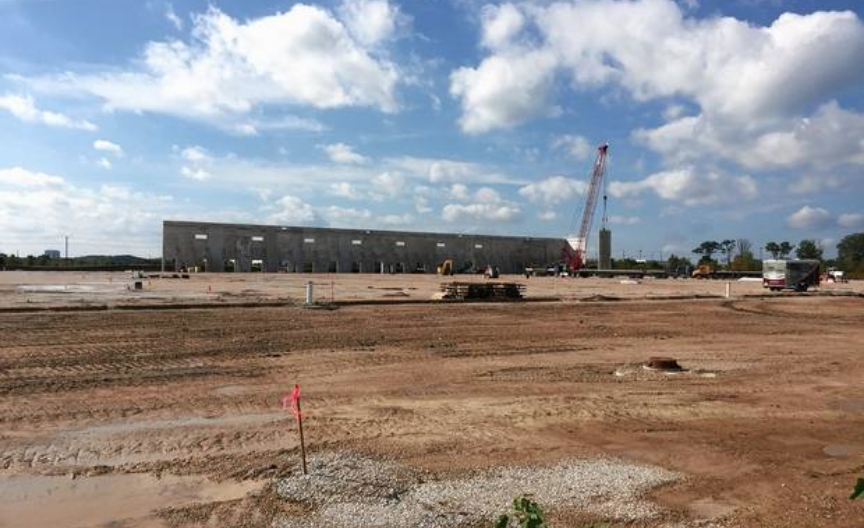
New facilities for Suncast Corp.Greco and Sons Inc. and Norix Group Inc. will be built at the 800-acre campus south of Roosevelt Road. In fact, construction already has started on a 782,000-square-foot building that Batavia-based Suncast will lease from Pritzker Realty Group.

During an event on Wednesday, the business park’s owner — the DuPage Airport Authority — welcomed the three companies while announcing two other pending projects. All five would amount to more than $24 million in purchased land and encompass roughly 170 acres.

“This means construction of more than 1 million square feet of new buildings, hundreds of jobs located here in DuPage County, construction jobs, and positive economic impact,” said Stephen Davis, chairman of the DuPage Airport Authority Board.

Revenue stemming from the deals will be allocated toward FAA-mandated upgrades at the airport.

Meanwhile, estimates show the Suncast and Norix projects will jointly provide nearly 400 permanent and more than 600 construction jobs, generating a combined $94 million in economic impact. Employment estimates from Greco are still under evaluation, officials said.

Suncast, which manufactures custom wood structures and resin products, is planning to replace a warehouse in Montgomery with the future warehouse, distribution and showroom facility in West Chicago.

Sean Maher, managing director at Pritzker Realty Group, said the 40-acre site was chosen in part because of its proximity to Batavia. It’s also not too far from expressways.

“It’s a good location,” said Maher, adding that the DuPage Business Center is one of the few sites left in the county with sizable pieces of buildable land.

Norix Group, which makes commercial furniture, decided to stay in West Chicago and build a new 200,000- square-foot global headquarters in the business park. 

Construction is expected to start next year.

“This is a great area for us,” said Shane Edwards, vice president of operations at Norix. “This is exactly where we want to be. So we decided to build.”

Meanwhile, Greco and Sons, an Italian foods distribution company based in Bartlett, has signed a $6.2 million agreement to build a new food processing and warehouse center on 46 acres.

Originally dubbed the DuPage National Technology Park, the site was envisioned for high-tech businesses. State officials had so much faith in the project that the Department of Commerce and Economic Opportunity awarded a $34 million grant for roads, utilities and landscaping.

But the site struggled for years to find tenants. Officials say that changed when the airport formed a partnership with West Chicago and NAI Hiffman, the commercial real estate firm marketing the business center.

Working with other taxing districts in West Chicago, a “strong package” was offered to attract developers and companies to the site, according to Mayor Ruben Pineda.

“The package, which includes many tax incentives, made perfect economic sense in the long run due to the enhanced revenue streams that will be realized for our community,” Pineda said.

DuPage County Board Chairman Dan Cronin said he’s “delighted” by the progress that’s been made at the business park.

“I’ve always viewed this 800-acre campus as a real opportunity,” Cronin said. “We have no doubt that this is a gem of a piece of property. With the airport nearby, I am very bullish on the future of this area.”

West Chicago’s DuPage Business Center to welcome DS Containers

An exciting new development will soon break ground at the DuPage Business Center in West Chicago. CenterPoint Properties recently announced the details of a 300,278 square foot build-to-suit distribution center for DS Containers, and City officials couldn’t be happier. The state-of-the-art facility will be situated on 14.55 acres, with the ability for future expansion. “This represents a major investment in our community and the City looks forward to working with all parties to ensure a first-rate development experience. We look forward to celebrating a ground-breaking later this month and to welcoming DS Containers to our business community,” said Mayor Ruben Pineda.

DS Containers is a leading manufacturer of two-piece polymer-coated steel aerosol cans. It will occupy the 300,278 square foot space, which is expandable by approximately 250,000 square feet providing flexibility in their operations. The build-to-suit will feature 20 exterior dock doors, 1 drive-in door, 27 trailer positions and 73 car parking spaces, and is situated within close proximity to the company’s manufacturing facility in Batavia. According to Edward Harrington, Senior Vice President of Development of CenterPoint, the attributes of the DuPage Business Center including diverse communication and utility infrastructure, fully improved sites with off-site detention, and adjacency to key transportation routes, make it a solid business destination. “We are excited for the continued development of new Class A facilities at DuPage Business Center. DS Containers will be the latest addition to a group of industrial tenants in the park that has flexible land sites with ready-to-go infrastructure and improvements in place. The DuPage Business Center boasts immediate developable land sites, in addition to providing the benefits of a corporate campus setting.” For more information about  the DuPage Business Center, please contact Dominic Carbonari (dominic.carbonari@am.jll.com), Frank Griffin (frank.griffin@am.jll.com) or Edward Harrington (eharrington@centerpoint.com). Pictured above (left to right): Stephen Davis, Chairman of the DuPage Airport Authority Board of Commissioners; Ruben Pineda, Mayor of West Chicago; Ed Harrington, Senior Vice President of CenterPoint Properties; John Duffy, Vice President of DS Containers; and Dan Cronin, DuPage County Board Chairman.